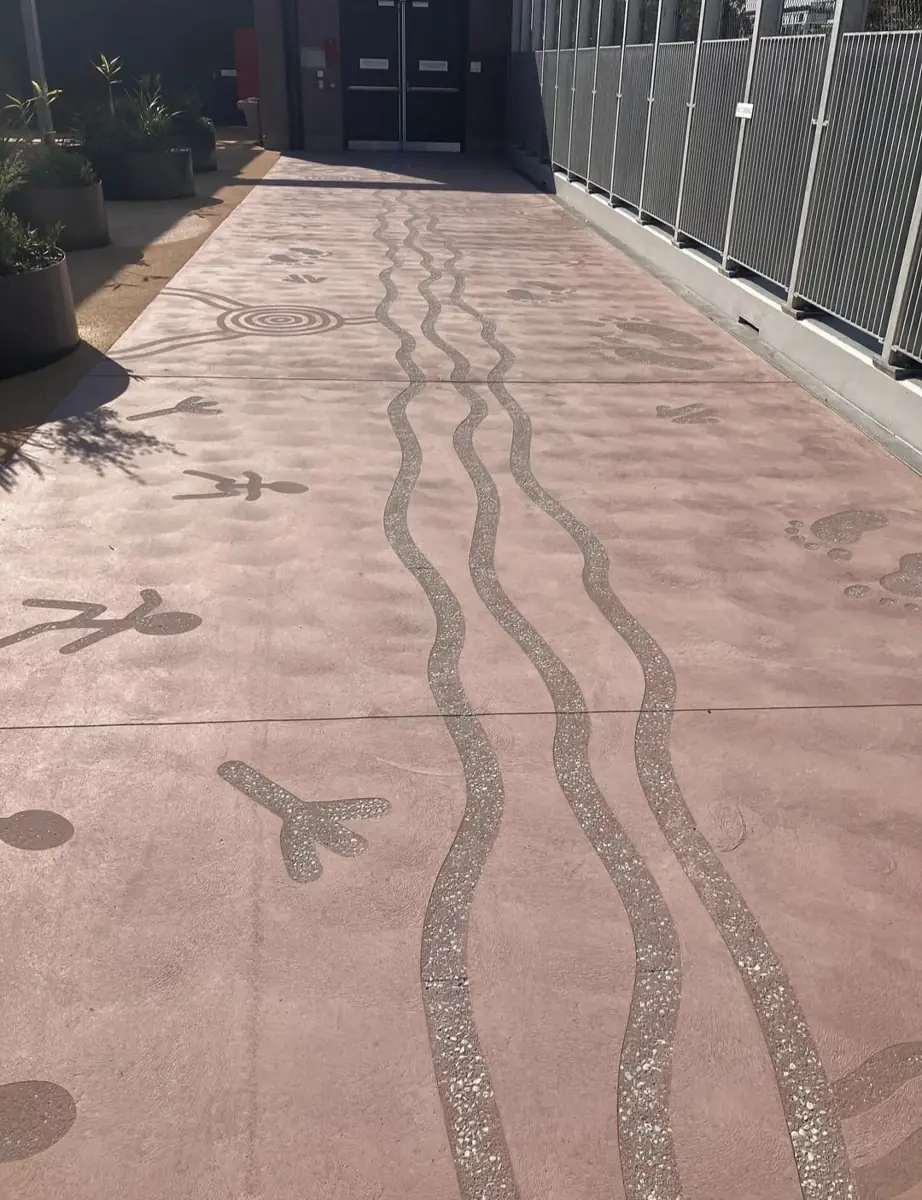
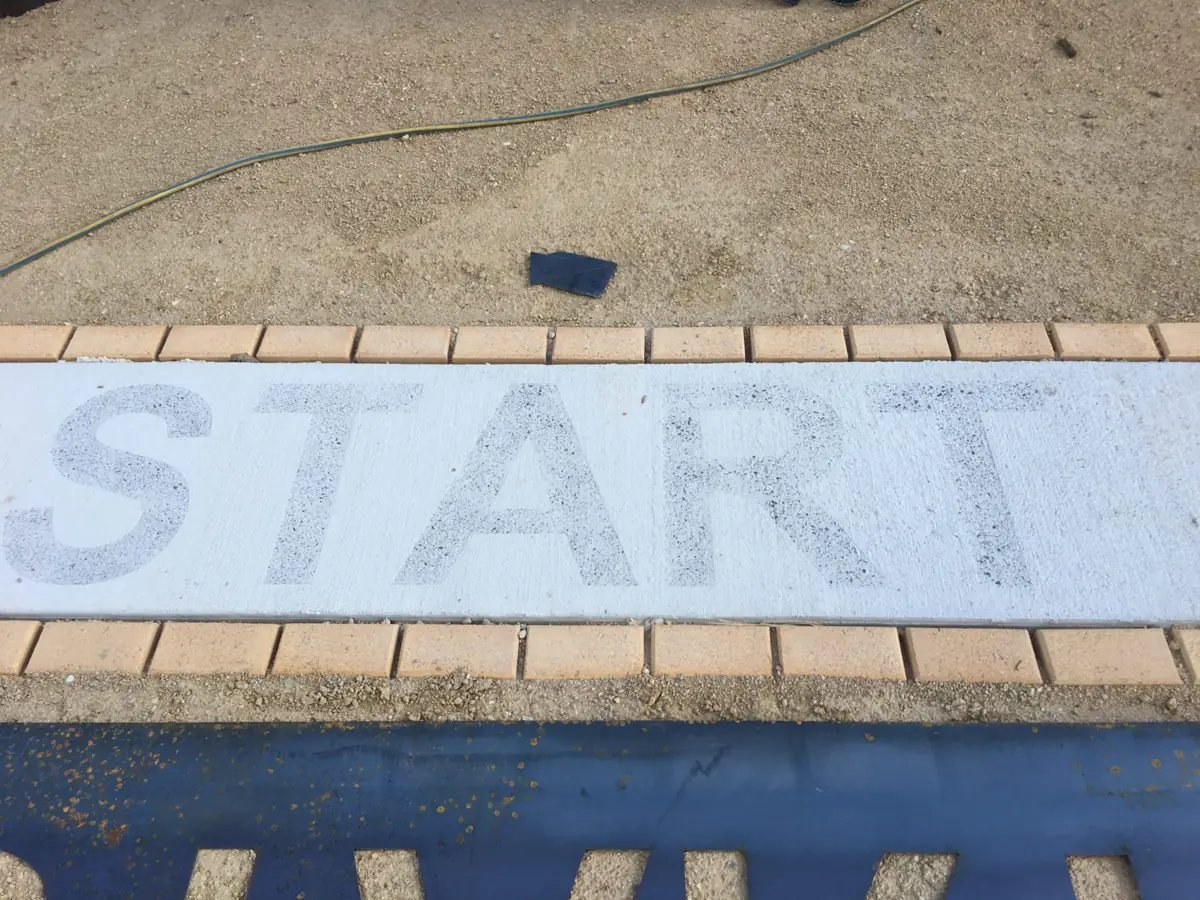
Artwork translated into the surface
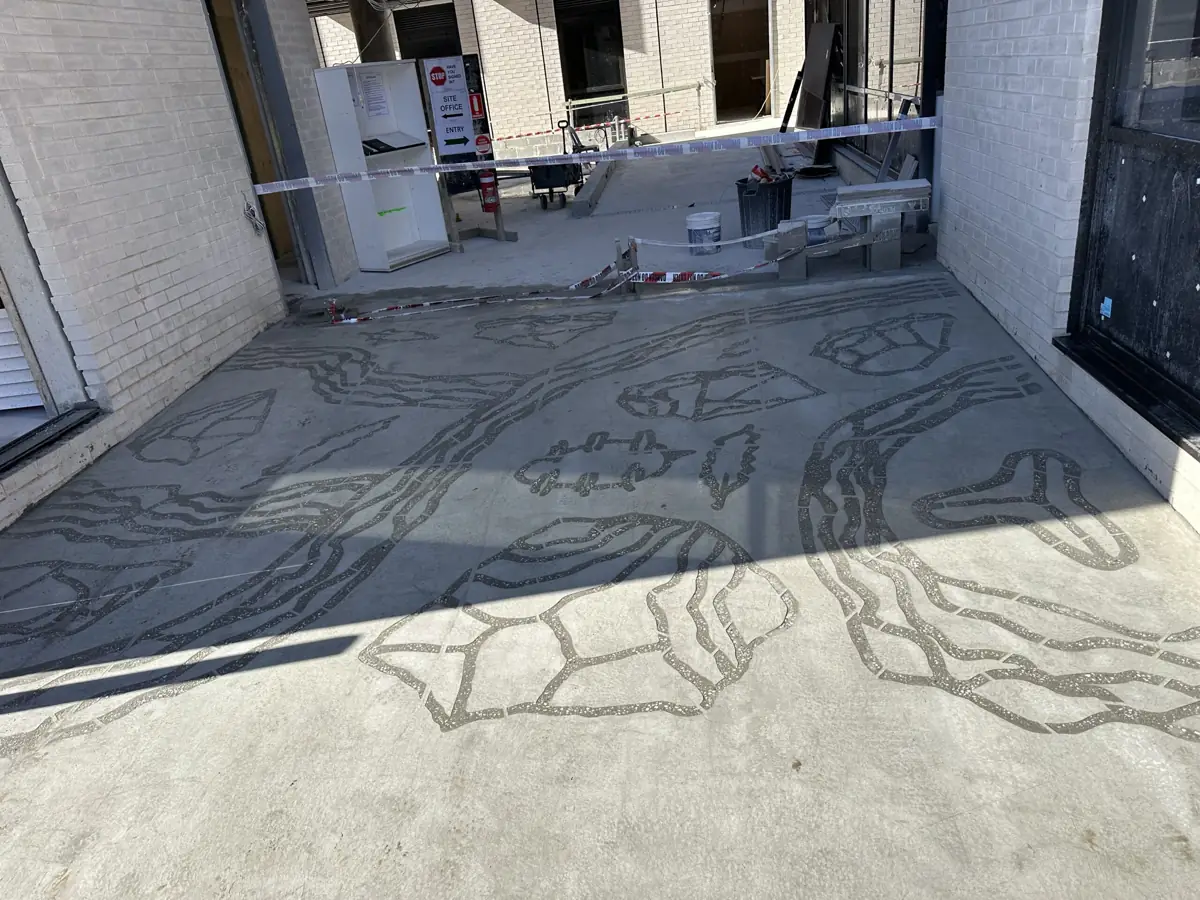
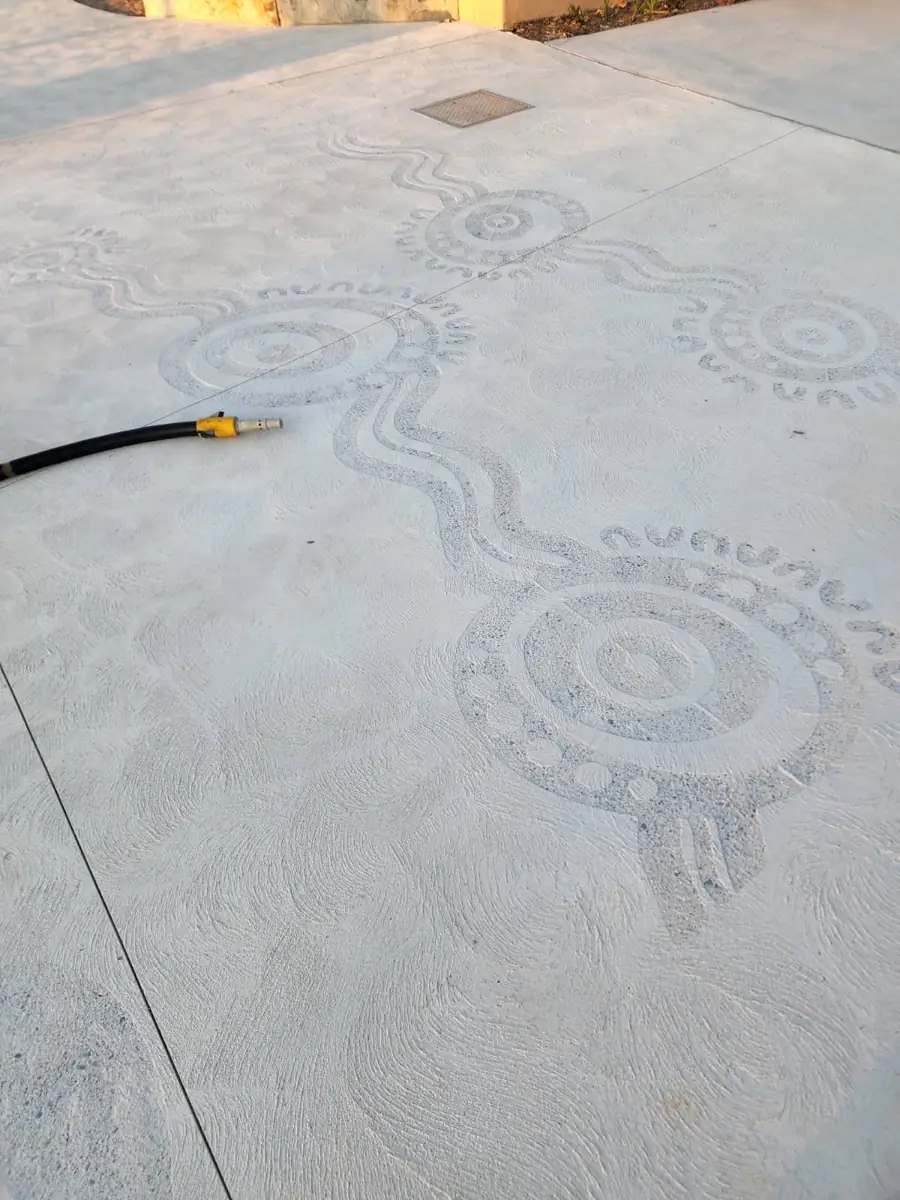
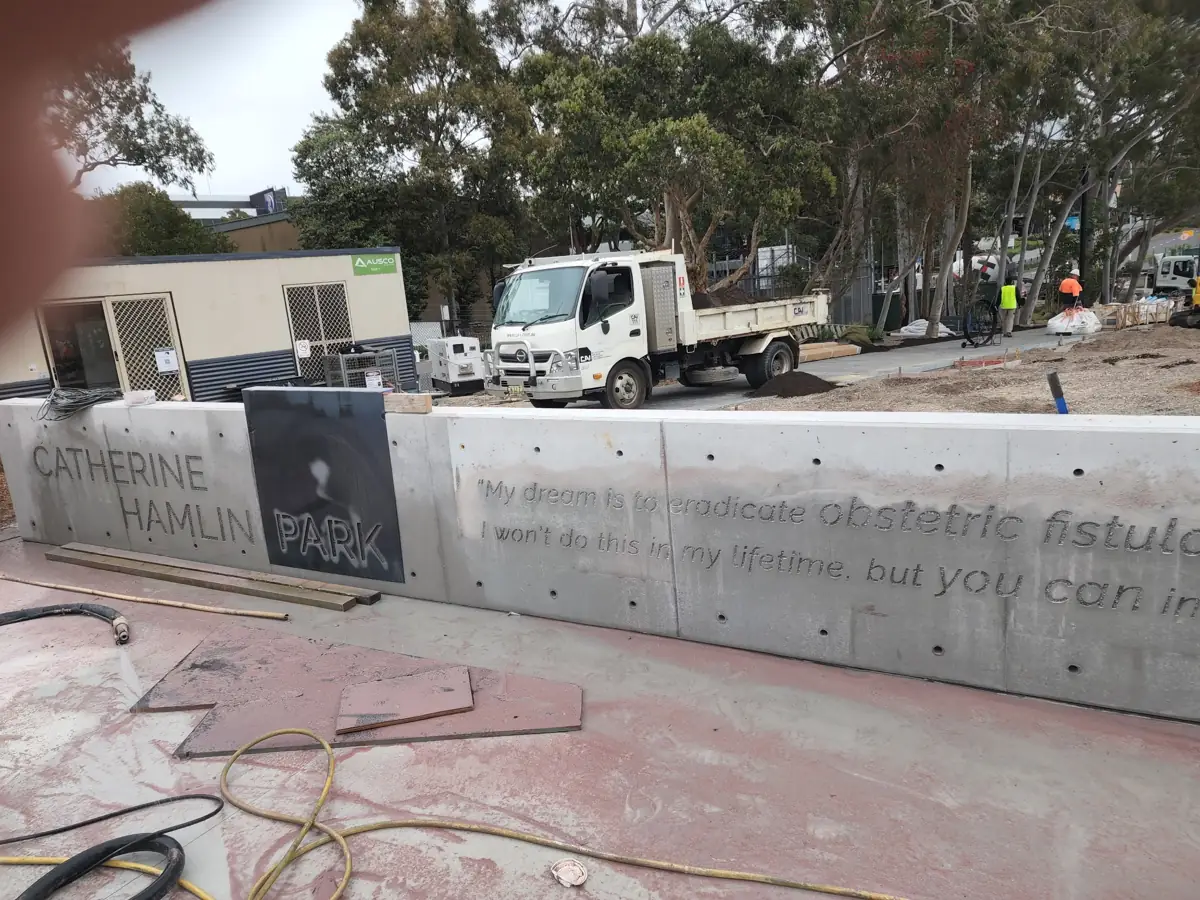
Decorative blasting uses an approved stencil to create logos, lettering, patterns and graphics in concrete. Suitability of timber or brickwork artwork can also be reviewed. Design scale, line width and depth are matched to the substrate texture.
Design approval and setting out
We need approved artwork, dimensions, orientation and set-out references. Stencil material and the proposed finish are agreed before production. A sample is particularly useful for fine detail or when contrast is important.
Controlled exposure and contrast
The design becomes visible through the difference between the blasted and protected surface. Aggregate, colour, grain and brick texture affect that contrast. Crisp detail depends on the stencil, material and exposure depth.
Protection and acceptance
Adjacent finishes are protected and the stencil is secured for the work. Acceptance follows approved artwork and the sample rather than a steel preparation class. Designs, placement and practical tolerances are confirmed before blasting.
From a concept to workable artwork
A logo, lettering or pattern must be translated into a stencil that can hold its shape during blasting. Fine lines, small text and closely spaced details may need adjustment for the concrete texture and intended viewing distance. We review the artwork with the client so the approved design is practical to reproduce at the final size.
Position, scale and alignment
The agreed layout identifies overall dimensions, orientation and reference points such as joints, building lines or pavement edges. Repeating patterns need a clear start point and alignment across the area. Artwork approval and site set-out are separate checks: an approved graphic still needs its location confirmed before it is transferred to the surface.
Contrast and depth are part of the design
The finished graphic relies on the difference between the protected and exposed surface. Concrete colour, aggregate, existing texture and prior sealing influence that contrast. A sample helps establish whether the design will read clearly and how much exposure is suitable. The result is a textured treatment within the substrate, with its natural variations visible.
Care of the completed artwork
Stencil removal and residue recovery are completed without unnecessarily disturbing the surrounding finish. The agreed inspection checks the artwork against the approved layout and sample. Subsequent sealing, staining or maintenance can change contrast, so any planned follow-on treatment should be discussed early. Client-supplied artwork, final dimensions and photos of the surface help us prepare a useful quote.